From Senate tie-breaking votes and anti-fraud leadership to Iran diplomacy and questions about the results of policies he backs.
His clearest individually documented actions are constitutional tie-breaking Senate votes; chairing a formal interagency task force; high-level diplomatic negotiations; and announcing or advocating specific administration enforcement initiatives. These are real responsibilities, but a vice president does not independently enact a president's entire agenda. Claims that Vance personally created every administration-wide outcome should be evaluated cautiously.
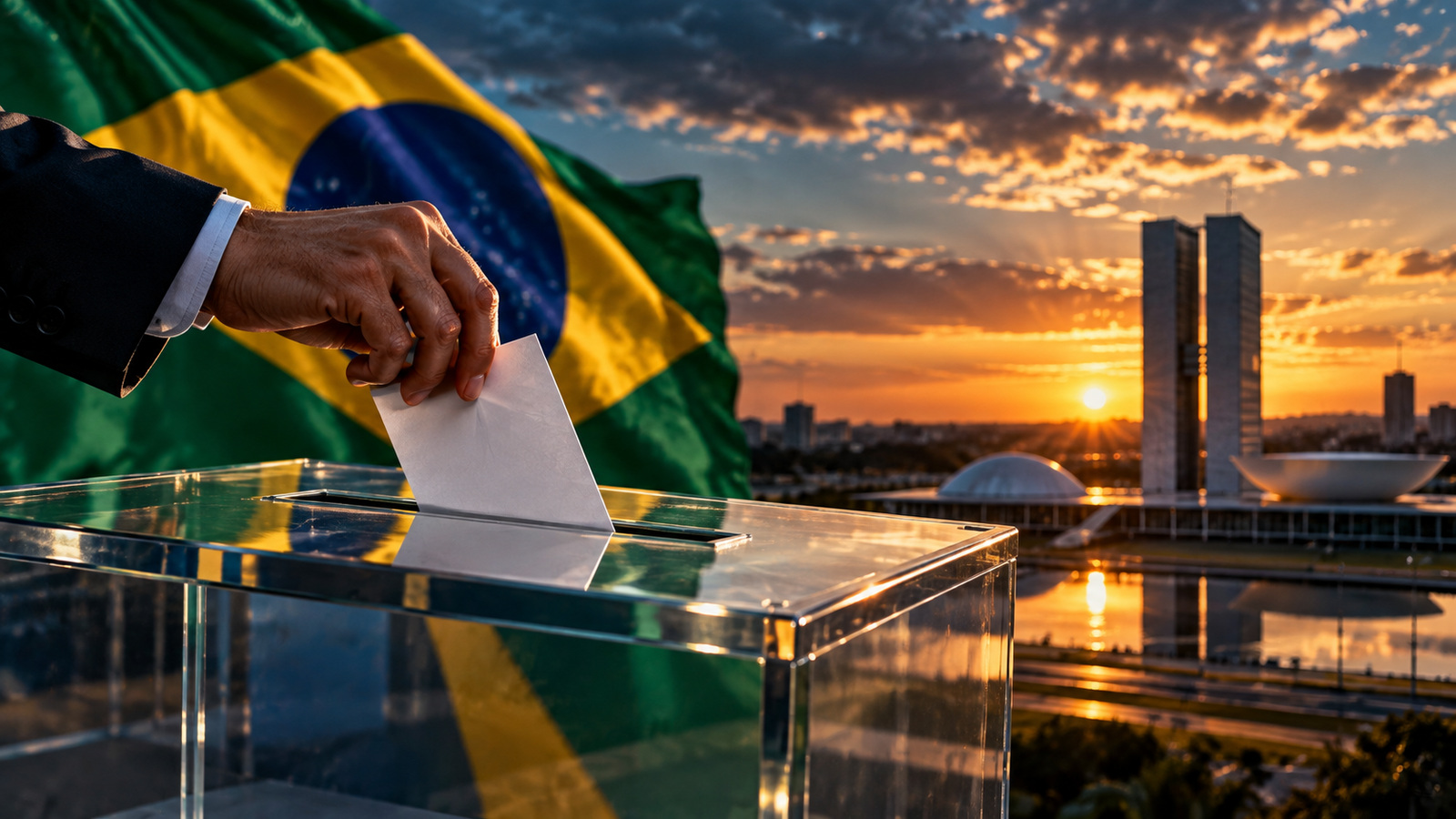
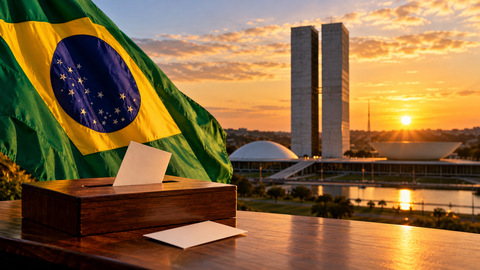
Brazil's Superior Electoral Court (TSE) declared President Luiz Inácio Lula da Silva reelected on Sunday, October 25, 2026, following a runoff against Sen. Flávio Bolsonaro. The court reported 64,256,232 valid votes for Lula (51.79%) and 59,826,041 for Bolsonaro (48.21%), a margin of 4,430,191 votes. Bolsonaro declined to recognize the outcome and announced plans to seek annulment over a last-minute judicial decision allowing voting to continue at some polling places after severe weather and transportation disruptions. Both campaigns had sought extra voting time, though with differing scope. A stated intention to challenge is not a court finding of fraud or an overturned result. The dispute will test Brazil's electoral institutions even as the declared winner faces economic and congressional challenges.
Brazil's Superior Electoral Court (TSE) declared President Luiz Inácio Lula da Silva reelected on Sunday, October 25, 2026, following a runoff against Sen. Flávio Bolsonaro. The court reported 64,256,232 valid votes for Lula (51.79%) and 59,826,041 for Bolsonaro (48.21%), a margin of 4,430,191 votes. Bolsonaro declined to recognize the outcome and announced plans to seek annulment over a last-minute judicial decision allowing voting to continue at some polling places after severe weather and transportation disruptions. Both campaigns had sought extra voting time, though with differing scope. A stated intention to challenge is not a court finding of fraud or an overturned result. The dispute will test Brazil's electoral institutions even as the declared winner faces economic and congressional challenges.
The Centers for Disease Control and Prevention reported 4,588 confirmed U.S. measles cases for 2026 as of October 22, a substantial increase from 2,289 reported in all of 2025. Pennsylvania's Department of Health reported 1,338 cases across 44 counties as of October 23, including 255 hospitalizations and five state-confirmed measles-associated deaths. The CDC national death tally had not yet reflected all five Pennsylvania deaths; this difference should not be treated as proof that either agency's case count is wrong. Measles spreads through the air, can cause pneumonia and other complications, and is highly preventable with the recommended two-dose MMR vaccination series. The data show why public-health officials are emphasizing timely vaccination and clear reporting.
High-level delegations from Saudi Arabia, Turkey and Pakistan traveled to Tehran on Monday, October 26, to meet Iranian officials amid fears of renewed fighting involving Iran, Israel and the United States. Participants included Saudi Defense Minister Khalid bin Salman, Pakistan army chief Asim Munir and Turkish intelligence chief Ibrahim Kalın, according to Associated Press reporting. Iran acknowledged discussions about regional security; Saudi Arabia characterized the purpose as de-escalation. Attacks by the Iran-aligned Houthis in Yemen against Saudi targets are among the disputes under discussion. Qatar has also been engaged in mediation, but there was no announced settlement as of this report. The meetings offer a diplomatic opening without establishing that the parties have agreed to halt hostilities.
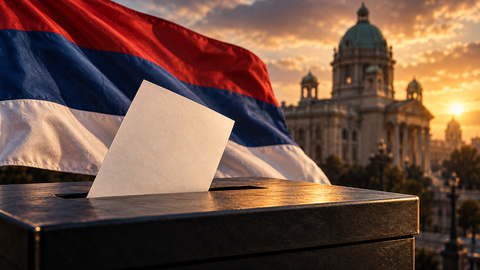
Serbia's student-backed opposition list emerged as the decisive winner of Sunday's snap parliamentary election, ending the governing party's long dominance. In a Monday, October 26 update based on 8,135 polling stations, Serbia's Republic Electoral Commission reported 52.65% of counted votes for the student list and 39.22% for the Aleksandar Vučić–United Serbia coalition. Vučić conceded defeat late Sunday. The movement grew from protests after a Novi Sad railway station canopy collapsed in November 2024, killing 16 people and raising concerns about corruption and public accountability. The election indicates a likely parliamentary majority for the student-backed list, but final seat allocations, leadership decisions and governing arrangements still require formal steps.
An independent commission of inquiry created under the United Nations Human Rights Council said Monday, October 26, that Israel continued acts it characterizes as genocidal in Gaza despite an October 2025 ceasefire. According to an Associated Press review of the new report, investigators estimate Israeli control in Gaza rose from 53% to at least 60% during the ceasefire and say at least 196 Palestinians were killed by Israeli fire along an advancing front. The commission also alleged war crimes and sexual violence against Palestinian detainees. Israel rejected the commission's findings, calling its work biased and denying genocide and sexual-abuse allegations. AP said it could not independently confirm several detailed testimony accounts. A commission's findings may be used in legal proceedings, but they are not a final ruling by the International Court of Justice or a criminal conviction.
France's Interior Ministry reported 410,000 people at 289 public gatherings on Saturday, October 24, including 110,000 in Paris. Labor organizers estimated about 800,000 nationwide. In a provisional update issued Sunday, the ministry reported 1,314 arrests, 53 injured security officers and 24 shops looted. Most authorized marches proceeded peacefully, although disturbances occurred in parts of several cities. Protesters highlighted living costs, school funding, deteriorating public services and concerns over policing. The very different turnout estimates are attributed counts, not independently reconciled totals. The demonstrations test President Emmanuel Macron's administration amid wider social and political dissatisfaction.
Saudi Arabia's military coalition said on Sunday, October 25, that it intercepted missiles and drones aimed at Riyadh and southern cities during continuing hostilities with Yemen's Houthi movement. Its reported incidents included two drones and a ballistic missile toward the capital, a cruise missile toward Khamis Mushait and a subsequent group of ten ballistic missiles aimed at the south. These are claims by the Saudi-led coalition, not an independently established tally of impacts. King Khalid International Airport designated Terminals 1 and 2 for limited resumed service after a deadly October 10 attack. Houthi spokesman Yahya Saree warned that the airport remained a target. The Houthis control parts of Yemen but are not Yemen's internationally recognized government. The exchanges threaten travelers and regional security.
Serbian voters went to the polls Sunday, October 25, in a snap parliamentary election widely framed as a test of Aleksandar Vučić's long-running political dominance. His Serbian Progressive Party faces a student-backed electoral list built from demonstrations following the 2024 Novi Sad railway-station canopy collapse, which killed 16 people. The election commission scheduled the vote for October 25; AP reported voters could choose among 18 lists seeking seats in the 250-member National Assembly. Vučić resigned the presidency in September and seeks to return as prime minister through his party. Voting was underway at the Sunday-morning reporting cutoff; no winner was known. The stakes include accountability, public trust and Serbia's relationship with the European Union.
A shooting just before 8 p.m. Saturday, October 24, near Perry and Manatee streets in Tallahassee injured at least 12 people, including six minors, according to Tallahassee Police. Eleven people sustained gunshot wounds; at least three of those injured were in serious condition and nine others were described as stable in the department's 11:30 p.m. update. The location was near Florida A&M University's Bragg Memorial Stadium after a homecoming football game, but authorities have not established that the shooting was caused by the university or the event. Police said a physical altercation apparently preceded the gunfire, with the motive and people responsible still under investigation. The university said its campus remained safe.
Ukraine's government said Saturday, October 24, that SpaceX satellite communications used by its forces had recovered after more than a week of restrictions affecting equipment on fast-moving platforms. Ukrainian officials described service returning at operating speeds above 400 km/h, after restrictions reportedly near 160 km/h disrupted drone interception and other missions. Those figures refer to movement speeds at which a terminal can stay connected—not internet download speeds. Elon Musk subsequently alleged that Ukrainian forces violated commercial Starlink terms by using it for offensive drone strikes; Ukrainian officials challenged that characterization. Who ordered the limitations affecting the separate Starshield military service is disputed. The episode shows how control of communications infrastructure can affect a country at war.
Brazil is preparing for its Sunday, October 25 presidential runoff between incumbent President Luiz Inácio Lula da Silva and Sen. Flávio Bolsonaro. In the October 4 first round, Bolsonaro received 47.03% of valid votes and Lula 45.16%, according to Brazil's official public news agency. At Friday's final debate, they argued over living costs, corruption and public security. A Datafolha survey conducted October 20–22 placed each candidate at 50% of valid-vote intentions, within the poll's uncertainty. No runoff result exists yet.
Jordanian officials said Saturday, October 24 that the death toll from a gun attack during a Greek Orthodox funeral in the Karak region rose from seven to eight after one critically injured person died. Earlier official and Reuters reporting said approximately 40 people were wounded. The October 23 attack occurred at Hamoud Church in a region with a longstanding Christian community. Security forces were searching for the perpetrators; no group had claimed responsibility, and authorities had not established links to a particular organization. Jordan declared three days of mourning.
2 min read
A LASTING HOME FOR THE WORK
More than a headline. A fuller record.
Created and edited by Todd Russell, The Russell Record began on Facebook as The Full & Fair Record. The name is changing; the purpose remains: help readers understand the evidence and reach their own conclusions.
Facebook remains a place to discover the articles and discuss them. This website is their organized, lasting home.
The Russell Record masthead
Our approach
Document what happened. Examine the evidence. Consider meaningful counterarguments and legitimate criticism. Distinguish facts from claims, analysis, and opinion.
Public figures & the record
Look beyond the party label. What has a person done? What changed as a result? What deserves credit, what warrants scrutiny, and what remains unresolved?
Editorial responsibility & corrections
Todd selects the subjects and provides editorial direction, review, and editing, with AI assistance in research and drafting. Responsibility for publication remains with the editor. Questions, corrections, substantive disagreement, and additional evidence are welcome.
Reading & privacy
This site does not add advertising scripts, analytics services, or social-media tracking widgets. Your browser can remember your preferred article text size on this device. Hosting providers may maintain ordinary server access logs. External source and Facebook links have their own privacy practices.
The purpose is to inform your judgment—not make it for you.